

Introduction
Office noise is not always caused by loud machinery or busy communal areas. Sometimes, the problem develops gradually as everyday conversations, telephone calls, keyboard sounds, and movement combine throughout the working day. Employees may find themselves repeating information during discussions or struggling to concentrate when colleagues are working nearby.
While office layout and working practices influence the overall environment, the materials used inside a building also play an important role. Bare walls, glass partitions, and other hard surfaces can reflect sound, contributing to unwanted echoes and making conversations less comfortable.
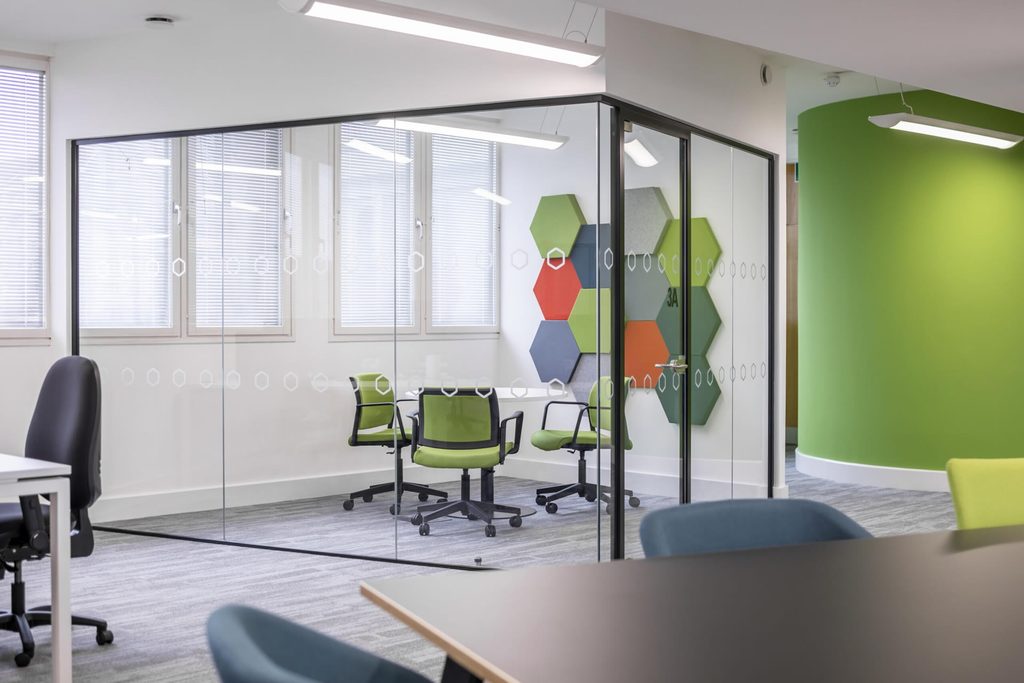
Wall-mounted acoustic treatments offer businesses a practical way to address some of these challenges without completely redesigning their interiors. Available in different shapes, materials, colours, and textures, they can help manage reflected sound while creating attractive architectural features.
For businesses planning an office refurbishment, understanding the options available can make it easier to select suitable products that support both workplace comfort and interior design.
Understanding the Relationship Between Walls and Office Noise
Walls influence how sound behaves inside an office. When someone speaks, sound waves travel through the air and encounter surrounding surfaces. Depending on the material and construction, some sound energy is absorbed while some is reflected back into the room.
In an office with extensive hard surfaces, these reflections can overlap with ongoing conversations. This may contribute to reverberation, making speech less distinct and creating a busier acoustic environment.
The effect can be particularly noticeable in meeting rooms, shared workspaces, reception areas, and offices with minimal furnishings.
Adding suitable sound-absorbing materials to selected wall surfaces can help reduce these reflections. The objective is to create a more balanced acoustic environment without removing the openness and visual character of the interior.
It is important, however, to understand the difference between sound absorption and sound insulation. Absorbing sound helps manage reflections within a space, while sound insulation concerns the transmission of sound from one area to another.
Wall panels can help with the first problem, but they will not automatically prevent conversations from travelling through thin partitions, doors, or building structures.
Identifying the main source of the disturbance is therefore an essential first step.
How Acoustic Office Panels Support Noise Reduction
Businesses exploring acoustic office panels should begin by considering where sound reflections are most noticeable and which surfaces are suitable for treatment.
Wall panels introduce sound-absorbing materials into the room. Depending on their construction and acoustic properties, they can help reduce reverberation and improve the clarity of speech.
Their effectiveness depends on several factors, including panel thickness, material composition, surface coverage, installation method, and the characteristics of the surrounding space.
For example, a meeting room with large reflective walls may benefit from strategically positioned panels near the areas where conversations take place. A shared office with several workstation clusters might require a more distributed arrangement.
The Acoustics Company offers wall-mounted acoustic products across several categories, including PET panels, fabric-covered acoustic panels, decorative grooved designs, printed panels, and three-dimensional wall features. These options allow designers to select treatments according to the requirements of individual projects.
Rather than choosing panels solely because they match the office furniture, businesses should consider their intended acoustic function alongside appearance, dimensions, and installation requirements.
Choosing Between Different Wall Panel Designs
Wall treatments are available in many forms, making it possible to coordinate acoustic improvements with different architectural styles.
The most appropriate choice depends on the building, the desired visual effect, and the type of sound-related problem being addressed.
Fabric-Covered Panels for Professional Interiors
Fabric-covered acoustic panels are a versatile option for offices that require a relatively understated finish.
Their soft outer surface can introduce texture and colour into meeting rooms, private offices, reception areas, and collaborative spaces. A coordinated arrangement can complement existing furniture while helping manage reflected sound.
The Acoustics Company’s Montage acoustic panels use BASOTECT melamine foam and are available in different thicknesses, shapes, and fabric finishes. The range includes rectangular, circular, square, and triangular designs.
This flexibility allows designers to create anything from a simple arrangement of rectangular panels to a more distinctive geometric composition.
For instance, a company renovating a formal conference room might select panels that coordinate with the existing wall colour. A creative agency could introduce contrasting shapes to make the acoustic installation a visual feature.
Panel selection should still be guided by the room’s acoustic requirements. Fabric colour and appearance alone do not indicate how effectively a product will absorb sound.
Recycled PET Panels for Contemporary Workspaces
Polyethylene terephthalate, commonly known as PET, is another material used in acoustic wall products.
The Acoustics Company’s Alpha Acoustic Panel is manufactured using at least 75% post-consumer recycled PET fibre. The product is available in 12 mm and 24 mm thicknesses and is designed for applications including offices, educational environments, and hospitality interiors.
PET panels can be particularly useful where designers want to combine acoustic treatment with a contemporary visual finish.
They can be used as wall-mounted panels or incorporated into more extensive designs, depending on the product configuration. The material also offers opportunities for customisation through different colours, grooves, and printed designs.
For businesses reviewing their material choices, documented recycled content can be one consideration alongside acoustic performance, durability, maintenance, and project requirements.
The appropriate panel should be selected using the manufacturer’s technical information rather than assumptions based on material type alone.
Decorative Grooved Panels for Feature Walls
Acoustic treatments do not have to look like conventional rectangular panels attached to a wall.
Decorative grooved products introduce patterns, depth, and texture while providing acoustic functionality. They can help transform a plain surface into a more distinctive architectural feature.
The Acoustics Company offers Etch wall panels made using its Alpha recycled PET material. The range includes patterns with different visual arrangements, such as diagonal lines, arches, vertical details, and geometric designs.
These options can help designers create a consistent interior identity across reception areas, meeting rooms, and shared workspaces.
For example, a business could use a grooved feature wall behind a reception desk and introduce complementary acoustic treatments in nearby meeting rooms. Repeating selected finishes throughout the building can help connect different areas visually.
The important consideration is to ensure that decorative choices also suit the acoustic requirements of the space.
Three-Dimensional Panels for Architectural Interest
Three-dimensional acoustic panels provide another option for offices that need a more sculptural appearance.
Their raised surfaces and distinctive forms create shadows, texture, and visual depth. Depending on the design, they can be used to establish a focal point in a meeting room, collaborative area, or reception space.
The Acoustics Company’s Tone collection includes several three-dimensional designs intended to combine sound absorption with a distinctive visual effect.
Such products can be particularly useful when businesses want acoustic treatments to become part of the architectural concept instead of appearing as an additional layer added after construction.
When specifying these panels, designers should consider their depth, arrangement, mounting requirements, and relationship with nearby furniture and circulation routes.
A visually striking installation still needs to be assessed according to its acoustic properties and intended application.
Where Should Acoustic Wall Panels Be Installed?
The position of a panel can influence how useful it is within a particular room.
Installing products without considering the room’s geometry may result in unnecessary coverage or leave important reflective surfaces untreated.
A more considered approach begins by identifying where conversations occur and how sound moves through the space.
Meeting Rooms and Conference Areas
Meeting rooms often contain large tables, glass partitions, screens, and other hard surfaces.
Wall-mounted acoustic panels can help manage reflected sound, potentially making discussions more comfortable and easier to follow.
The amount and location of treatment should reflect the room’s dimensions, existing finishes, and intended occupancy.
For rooms used for video conferencing, acoustic planning should also consider microphone placement, speaker positions, and background noise from ventilation or equipment.
Wall panels can contribute to improved room acoustics, but they should not be expected to resolve every sound-related issue independently.
Shared Workstations
In shared offices, nearby conversations may interrupt employees who are concentrating on individual tasks.
Acoustic wall panels can help reduce reflections from selected surfaces, particularly where the existing walls contribute to a reverberant environment.
However, they will not necessarily block direct speech from a nearby colleague. Businesses dealing with this problem may also need to review workstation spacing, desk screens, room zoning, and the location of collaborative areas.
A combination of measures is often more appropriate than relying on wall treatments alone.
Reception Areas and Informal Collaboration Spaces
Reception areas are designed to welcome visitors, while informal spaces encourage employees to exchange ideas.
Both environments may contain several simultaneous conversations, particularly during busy periods.
Decorative acoustic panels can provide a way to manage reflected sound while maintaining a welcoming interior.
Their colours, patterns, and textures can be coordinated with reception furniture, branding, and architectural finishes.
In collaboration areas, panel placement should also consider how furniture is arranged and whether the space is intended for quick discussions, longer meetings, or flexible group activities.
Combining Acoustic Performance with Interior Design
A successful acoustic installation should complement the building rather than conflict with its appearance.
Before choosing products, businesses should establish a design direction and consider how the panels will relate to flooring, furniture, lighting, wall colours, and other finishes.
Neutral colours can create a subtle effect in traditional office environments, while contrasting tones can help define different zones within a contemporary workspace.
Patterned panels offer another opportunity to introduce visual identity. Printed acoustic products can incorporate custom imagery or graphic designs, subject to the manufacturer’s available options and specifications.
The Acoustics Company’s Imprint range, for example, allows selected acoustic panels to be customised with printed images and designs.
This can be useful for businesses that want to integrate company branding or bespoke artwork into their interiors while retaining an acoustic function.
However, aesthetic customisation should not replace technical assessment. The chosen product must still meet the room’s acoustic, installation, and other applicable requirements.
Planning an Effective Noise-Reduction Project
Businesses considering new wall treatments should start by identifying the actual problem.
Is the room affected by excessive echo? Are employees struggling to follow conversations? Is sound travelling between adjoining offices? Or is the main concern noise from equipment and building services?
These questions matter because each problem may require a different response.
Where reverberation is the main issue, sound-absorbing wall panels may be appropriate. Where sound travels between rooms, the building’s partitions, doors, glazing, and structural connections may require attention.
An acoustic assessment can help establish which measures are likely to be most effective, especially in larger offices or projects with demanding performance requirements.
Businesses should also review the manufacturer’s technical information, including tested acoustic performance, material composition, installation guidance, and relevant fire-performance documentation.
Maintenance requirements and the expected lifespan of the products may also influence the final specification.
Taking these factors into account helps ensure that the finished installation meets practical needs rather than simply improving the appearance of the room.
Conclusion
Office noise can affect concentration, communication, and the overall experience of a working environment. When reflected sound contributes to the problem, carefully selected wall treatments can help create a more comfortable acoustic setting.
From fabric-covered panels and recycled PET products to decorative grooves, printed finishes, and three-dimensional designs, modern acoustic wall products provide a range of options for commercial interiors.
The Acoustics Company offers wall panels in different materials, configurations, and finishes, allowing businesses and designers to explore treatments that suit their projects.
Choosing acoustic office panels for noise reduction begins with understanding the room, identifying the source of the disturbance, and selecting products with appropriate acoustic properties. When combined with sensible space planning and suitable installation, wall treatments can support a more balanced workplace while contributing to an attractive, cohesive interior design.
