

Introduction
Rats can create serious concerns for homeowners, landlords and commercial property managers. They may damage building materials, contaminate areas where food is stored and create noise in walls, ceilings and floor spaces. When rodent activity continues despite treatment, it is important to look beyond the places where rats have been seen.
One possible source is the drainage system. Underground pipework can provide shelter and routes for rodents, while damaged joints or cracked pipes may create opportunities for them to reach areas around a building. Because these defects are hidden from normal view, identifying them can be difficult without specialist inspection equipment.
Understanding the connection between drainage and rodent activity can help property owners choose a more effective approach. Instead of repeatedly responding to individual sightings, investigating the source may reveal why rats keep returning.
Why Rats Can Be Difficult to Locate
Rats are adaptable animals that can move through a wide range of environments. They often use concealed spaces, including wall cavities, lofts, service ducts, floor voids and underground drainage networks.
This behaviour means that seeing a rat in one room does not necessarily indicate where it entered. A rodent noticed near a kitchen may have travelled through a concealed route from another part of the building. Similarly, activity near an external drain may be connected to a defect that is not visible from the surface.
Rats can also be active at times when buildings are quiet. Scratching sounds during the night, movement behind walls and occasional droppings may be the only signs occupants notice initially.
The difficulty is not simply removing the animal. It is understanding the route it uses and whether other rodents can follow the same path.
Could the Drainage System Be the Missing Piece?
Drainage systems are designed to transport wastewater safely away from buildings. When pipework is intact and connections are properly maintained, the system should function as intended.
However, drainage infrastructure can deteriorate over time. Ground movement, ageing materials, poor installation and physical damage may cause cracks or displaced joints. These defects can affect the integrity of the pipework and may create access points for rodents.
Rats are capable of travelling through drainage networks. Where a defect creates an opening, they may be able to move into surrounding ground or reach other connected spaces.
This does not mean every rat infestation originates in a drain. Food waste, external gaps, damaged structures and nearby nesting areas can also contribute. Nevertheless, drainage should be considered when the evidence suggests that rodents are using underground routes or when activity repeatedly returns after treatment.
Drainage Defects Worth Investigating
Several types of drainage problems may be relevant during an investigation.
Cracked pipes: A fracture in a drain can compromise the pipe’s structure and create an opening into the surrounding ground. The significance depends on the location and extent of the damage.
Displaced joints: Drainage sections are joined together, and movement can cause connections to become misaligned. Gaps may develop where sections no longer fit correctly.
Damaged junctions: Branch connections and junctions are important parts of a drainage network. Defective connections can create weaknesses that require inspection.
Redundant connections: Unused pipe branches should be properly sealed. An open or poorly closed connection may provide an unintended route.
Defective inspection chambers: Cracks, damaged walls or unsuitable covers can affect the condition of an inspection chamber and may require repair.
Poorly maintained pipework: Older or damaged drainage systems may have several defects that need to be considered together rather than treated as isolated issues.
Identifying these problems accurately is important because the correct repair depends on the nature and location of the defect.
How CCTV Technology Helps Investigate Hidden Problems
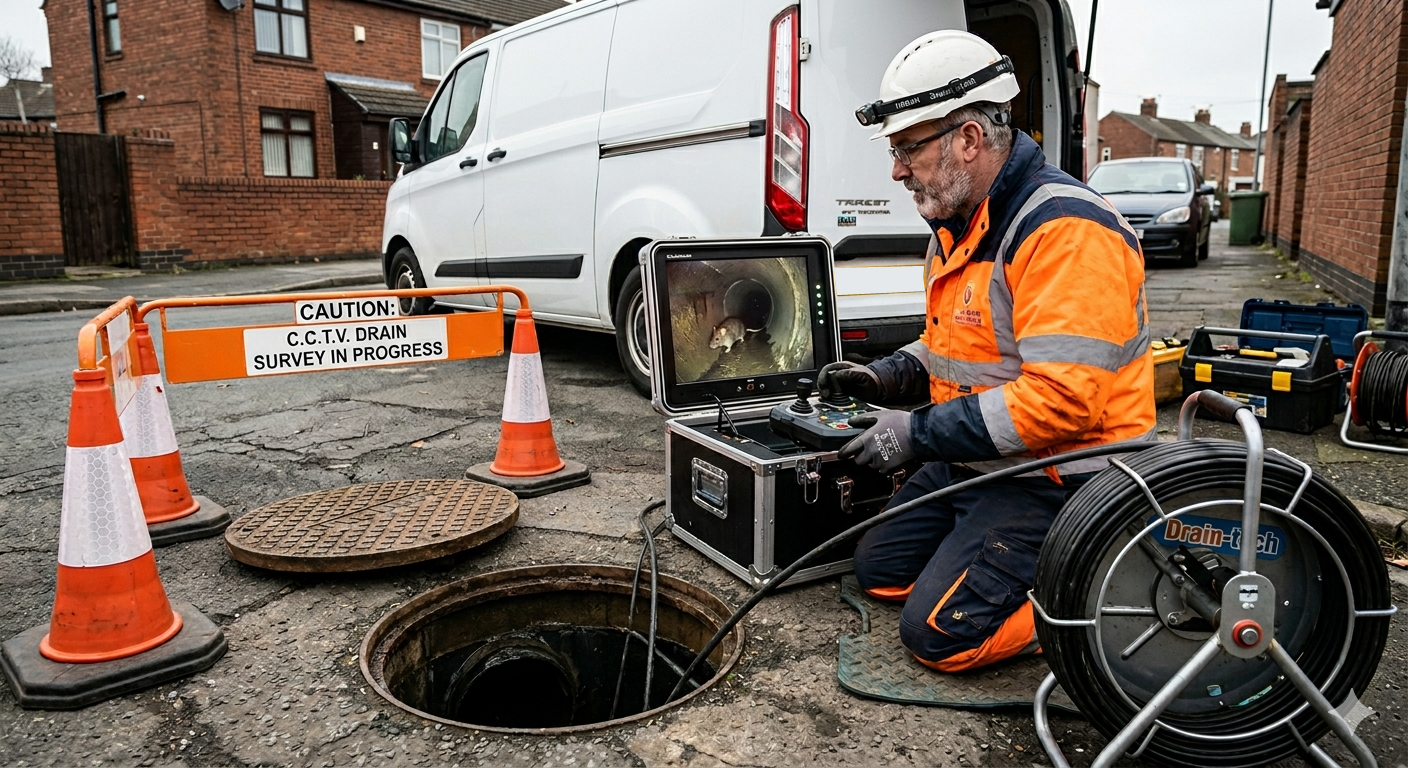
A CCTV drainage survey allows a technician to inspect the inside of pipes using a specialist camera. The equipment is introduced through a suitable access point and moved through the drainage system while images are displayed on a monitor.
This provides a view of areas that would otherwise be difficult to examine. The technician can look for cracks, displaced joints, damaged connections, obstructions and other signs that may explain drainage-related concerns.
The inspection can also help establish the condition of different sections of the network. Rather than relying only on surface observations, the property owner receives information based on what can actually be seen inside the pipework.
Depending on the service, findings may be supported by recorded footage, photographs or a written report. These records can help property owners understand the problem and decide whether repair work is necessary.
One of the main advantages of CCTV inspection is that it can often identify defects without digging up the entire drainage system. If a repair is needed, the inspection findings can help narrow down the area requiring attention.
When Should You Consider a CCTV Drainage Survey?
Not every rodent problem requires a drainage investigation. However, there are circumstances where it may be particularly useful.
Consider professional inspection if:
- Rats continue to appear after previous pest treatments.
- Rodents have been noticed close to drains or inspection chambers.
- There are signs of damaged or defective drainage.
- The suspected entry route is hidden underground.
- Activity repeatedly occurs in the same part of a property.
- Previous inspections have not identified a clear access point.
These signs do not prove that a drain is responsible. They indicate that further investigation may help establish whether drainage defects are contributing to the problem.
A suitable survey can provide information that supports decisions about treatment, repairs and prevention.
Combining Rodent Treatment with Drainage Investigation
An effective response to recurring rat activity may involve more than one type of work. If rodents are already inside a property, appropriate treatment may be necessary to manage the existing infestation.
At the same time, the property should be assessed for possible entry points. These may include openings around utility pipes, damaged external walls, roof spaces or drainage defects.
Professional Pest control can help assess the rodent activity and determine what treatment or further investigation may be appropriate. The Exterminator Pest Control provides rat-related drainage inspections in Chelmsford and across Essex, helping property owners investigate possible underground access routes and identify defects that may require attention.
Combining treatment with an investigation of the property’s structure can help avoid focusing only on the visible symptoms. The appropriate plan will depend on the findings and may involve monitoring, proofing or drainage repairs.
What Happens After a Drainage Defect Is Identified?
Finding a defect is only the beginning of resolving the problem. Once the inspection has identified an issue, the next step is to understand its significance and decide what action is appropriate.
A technician may recommend repairing a cracked section, correcting a displaced joint, sealing an unused connection or addressing damage within an inspection chamber. The exact work will depend on the condition of the system and the location of the defect.
Where rodent access is suspected, the repair plan should also consider the pest problem. Simply repairing one section of pipework may not be sufficient if rats have already entered the building or if other access routes remain available.
Property owners should ask for the findings to be explained clearly. A report or video recording can be useful when arranging repair work because it provides a reference for the location and nature of the problem.
The Role of Rat-Proofing in Long-Term Prevention
Rat-proofing aims to reduce the opportunities rodents have to enter a building or move between different areas. It may involve sealing suitable openings, repairing damaged structures and addressing defects within drainage systems.
In some situations, a specialist one-way rat valve may be considered. Such a device is designed to allow wastewater to pass while restricting rodents from travelling back through the pipe in the opposite direction. Its suitability depends on the drainage layout and should be assessed by an experienced professional.
Other measures include maintaining inspection chambers, securing appropriate access points and repairing defective pipe connections.
Rat-proofing should form part of a wider prevention plan. Food waste, accessible bins, gaps around service pipes and poor building maintenance can all contribute to rodent problems. Addressing these conditions alongside drainage defects can improve the overall result.
Why This Matters for Homes and Commercial Premises
For homeowners, repeated rat sightings can create anxiety and disrupt everyday routines. Rodents may enter kitchens, lofts, garages or other areas where food and household items are stored.
Landlords and property managers may have to coordinate inspections, repairs and pest treatment while responding to tenant concerns. Identifying an underlying drainage defect can help establish what maintenance work may be needed.
Commercial premises have additional considerations. Restaurants, food retailers, warehouses and offices need to maintain suitable hygiene and working conditions. Rodent activity can affect stored goods, staff areas and customer-facing spaces.
A drainage investigation may be especially useful where the source of recurring activity is unclear. Understanding the condition of the underground system can help businesses make more informed maintenance decisions.
Choosing a Professional Drainage Inspection Service
Before arranging an inspection, property owners should explain the history of the rodent problem and any previous treatment. Mention where rats have been seen, whether there are signs near drains and whether the building has experienced drainage issues.
It is also useful to ask what the survey includes. Clarify which sections of the system will be inspected, whether footage or a report will be supplied and how any defects will be explained.
A professional CCTV Drainage Surveys for Rats service should help establish the condition of the pipework and identify potential defects that may be relevant to rodent access. The Exterminator Pest Control offers CCTV drainage investigations for customers in Chelmsford and surrounding parts of Essex.
Clear findings can help property owners decide whether drainage repairs, further pest treatment or additional proofing measures are required.
Conclusion
Persistent rat activity can sometimes have a hidden connection with a property’s drainage system. Cracked pipes, displaced joints, damaged junctions and unused connections may create possible routes for rodents to move beyond underground pipework.
CCTV drainage surveys provide a way to inspect these concealed areas and identify defects without unnecessary excavation. When the findings are considered alongside appropriate pest treatment and rat-proofing, property owners can take a more complete approach to resolving recurring problems.
For homeowners, landlords and businesses in Chelmsford and Essex, investigating the source of rodent activity can be just as important as treating the infestation itself. Understanding how rats may be entering a property helps guide practical repairs and supports better long-term prevention.
