

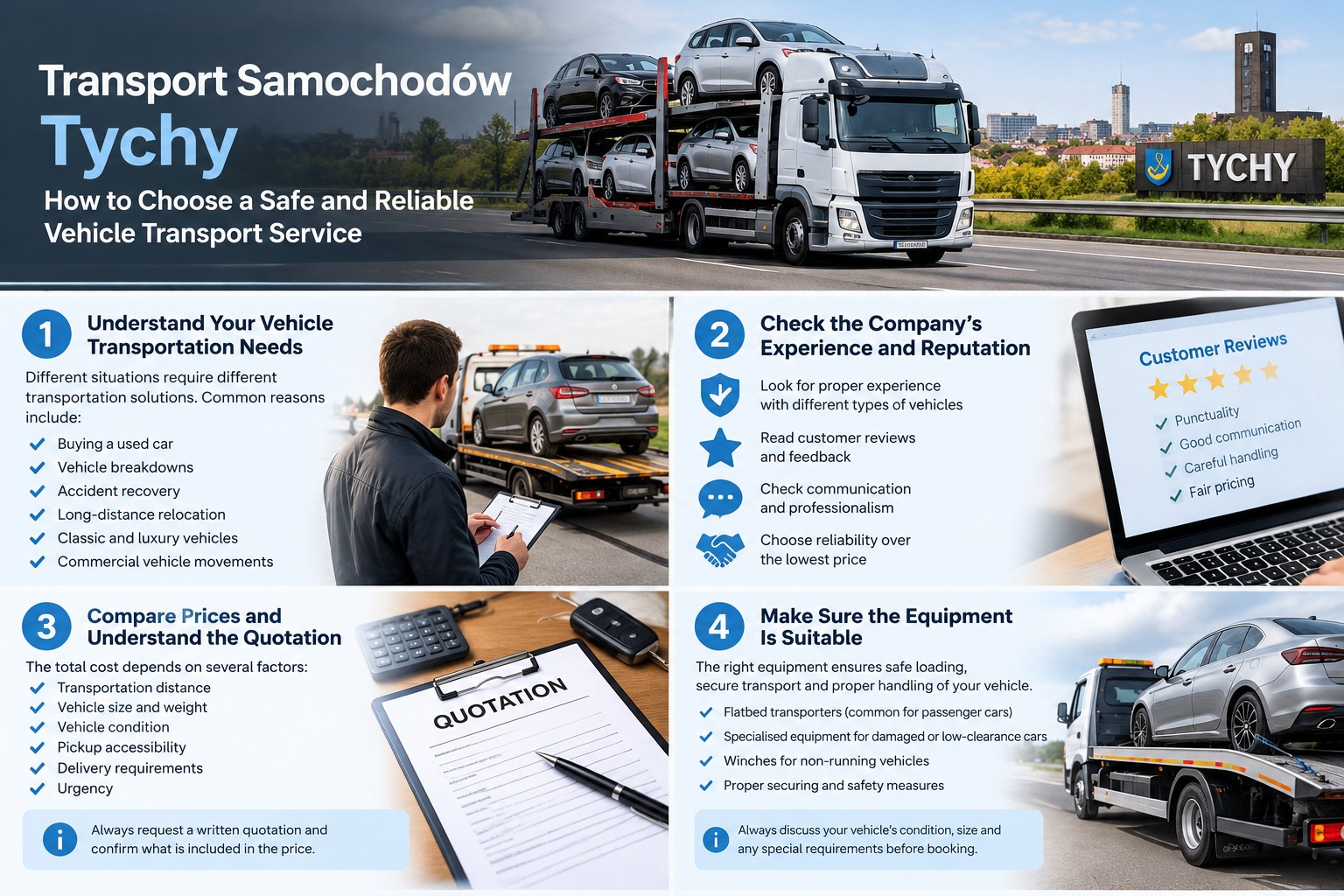
Moving a vehicle from one location to another can be more complicated than it initially appears. Whether you have purchased a car from another city, need to deliver a damaged vehicle to a repair workshop, or want to transport a car over a longer distance, choosing the right transportation company is essential. Professional vehicle transport helps reduce unnecessary risks, saves time, and provides a practical solution when driving the vehicle yourself is not possible.
For motorists and vehicle owners in southern Poland, transport samochodów Tychy is a useful search term when looking for professional car transportation services. However, selecting a provider requires more than comparing advertised prices. Equipment quality, insurance arrangements, communication, experience, and transparent pricing all contribute to a safe and reliable service.
1. Understand Your Vehicle Transportation Needs
Before contacting a transport company, identify why your vehicle needs to be moved and what type of service would be most suitable. Different circumstances require different transportation arrangements, and explaining your needs clearly can help the provider prepare an appropriate solution.
Common reasons for arranging professional vehicle transport include:
Buying a used car: Transporting a newly purchased vehicle from another city can be convenient when you cannot collect it personally.
Vehicle breakdowns: A car that cannot be driven safely may need transportation to a mechanic or specialist workshop.
Accident recovery: Vehicles with damaged steering, suspension, wheels, or bodywork may require professional handling.
Long-distance relocation: Moving to another region can make professional car transportation a practical alternative to driving.
Classic and luxury vehicles: Valuable cars may benefit from careful loading and suitable transportation equipment.
Commercial vehicle movements: Dealerships, workshops, and businesses may need vehicles moved between different locations.
Think about the vehicle’s condition, pickup location, destination, preferred delivery time, and any special handling requirements. Sharing these details when requesting a quotation can help prevent misunderstandings and unexpected costs.
2. Check the Company’s Experience and Reputation
A reliable vehicle transport provider should have suitable experience handling vehicles similar to yours. Transporting an ordinary passenger car may require different preparation from moving a damaged vehicle, a low-clearance sports car, or a larger van.
Start by researching the company’s background and reading customer reviews. Look for consistent feedback about punctuality, communication, careful vehicle handling, and whether the final price matches the original quotation.
Pay attention to repeated complaints rather than relying on one isolated review. Frequent reports of hidden charges, missed collection times, or poor communication may indicate that a company does not consistently meet customer expectations.
You can also contact the provider directly and ask about its experience, available equipment, and transportation procedures. A professional company should be willing to explain how it handles vehicles and what customers should expect during collection and delivery.
When comparing transport samochodów Tychy services, consider the provider’s overall reliability rather than choosing solely on the basis of the lowest advertised rate.
3. Compare Prices and Understand the Quotation
Cost is an important consideration when arranging vehicle transportation. However, an unusually low quotation does not necessarily represent the best value. Some offers may exclude additional services or include conditions that are not immediately obvious.
The total cost can depend on several factors:
Transportation distance: Longer journeys generally involve greater fuel and operating expenses.
Vehicle dimensions and weight: Larger or heavier vehicles may require specialised equipment.
Vehicle condition: A non-running car may need a winch or additional loading arrangements.
Pickup accessibility: Restricted parking areas, narrow entrances, and underground garages can complicate collection.
Delivery requirements: Specific delivery times or additional stops may affect the price.
Urgency: Short-notice transportation may cost more than a flexible booking.
Request a written quotation whenever possible. Confirm whether the price includes collection, loading, transportation, unloading, and any applicable additional charges.
If you receive several quotations, compare the services included in each offer. A slightly more expensive provider may offer clearer terms, better communication, or more suitable equipment.
Ask about cancellation conditions, waiting charges, and payment methods before confirming the booking. Understanding these details in advance can help you manage your budget and avoid unpleasant surprises.
4. Make Sure the Equipment Is Suitable
Appropriate equipment plays a central role in safe vehicle transportation. The method used to load, secure, and move a car should reflect its condition, dimensions, ground clearance, and any mechanical problems.
Flatbed transporters are commonly used for passenger cars, particularly when a vehicle cannot be driven or requires additional protection during loading. Other equipment may be suitable depending on the vehicle and the journey.
Before booking, explain whether the car starts, whether its wheels can turn, and whether the steering or suspension is damaged. Mention any fluid leaks or other known issues that could affect the loading process.
A professional operator should consider these details before deciding how to move the vehicle. For cars with automatic transmissions, all-wheel drive, or specialised mechanical systems, the manufacturer’s transportation recommendations may also be important.
Ask how the vehicle will be secured during transit. Suitable restraints and correct loading procedures help reduce unnecessary movement and minimise the risk of damage.
If the provider cannot explain how it will accommodate your vehicle’s condition, consider obtaining another quotation before making a decision.
5. Confirm Insurance and Liability Arrangements
Vehicle transportation involves responsibility for handling and securing the car properly. Before agreeing to a service, ask what insurance arrangements apply during collection, transportation, and delivery.
Do not assume that every possible type of damage is automatically covered. The applicable protection depends on the company’s policy, the service agreement, and the circumstances involved.
Ask whether the provider maintains appropriate insurance for its operations and how it handles damage claims. If you are transporting an expensive, classic, or recently purchased vehicle, make sure you understand the relevant coverage limits and any exclusions.
It is also helpful to photograph the vehicle before collection. Take clear pictures of the exterior, wheels, and any existing damage when it is safe and practical to do so.
At delivery, inspect the vehicle before signing any final paperwork, where the process allows. If you notice new damage, document it and notify the transport provider promptly.
Keep copies of the quotation, booking confirmation, invoice, photographs, and relevant correspondence. These records can help resolve questions about payment or responsibility if a disagreement occurs.
6. Choose a Company with Clear Communication
Good communication makes the transportation process easier to manage. From the initial quotation to final delivery, the company should explain what will happen and provide realistic information about timing.
Before confirming a booking, ask the provider:
When can the vehicle be collected?
What is the estimated delivery time?
Will the vehicle be transported directly or as part of a larger route?
What documents or keys are required?
What happens if traffic or weather delays the journey?
How will the company communicate updates?
What payment methods are accepted?
The answers can help you understand whether the service matches your schedule.
Provide accurate pickup and delivery addresses, together with any access instructions. If the vehicle is located at a workshop, dealership, or secured parking facility, confirm that the operator can access it at the agreed time.
Reliable communication is especially important when transporting a vehicle over a long distance. A provider that explains delays honestly and keeps customers informed can reduce uncertainty throughout the journey.
7. Prepare Your Car Before Collection
A little preparation can make vehicle collection more straightforward. Before the transport operator arrives, confirm the collection time and ensure that the person handing over the vehicle has the necessary authority and information.
Remove valuable personal belongings and unnecessary items from the car. Check the fuel level and follow the provider’s instructions regarding vehicle preparation.
Inform the operator about any existing damage, mechanical problems, alarm systems, or difficulties moving the vehicle. If the car does not start, make sure this has been communicated before collection.
Gather the documents required for the transaction or transportation arrangement. The exact requirements may vary according to the vehicle, company, and circumstances, so confirm them in advance.
Take photographs of the vehicle and keep the booking details accessible. These simple steps can reduce delays and help establish a clear record of the vehicle’s condition.
8. Consider Local Knowledge and Flexible Scheduling
A company familiar with Tychy and the surrounding region may understand local traffic conditions, common pickup locations, and practical routes for vehicle collection. This familiarity can be useful when arranging transportation from residential streets, commercial premises, or repair workshops.
Nevertheless, local knowledge should be considered alongside equipment, experience, pricing, and insurance arrangements. A nearby provider is not automatically the most suitable choice for every transportation requirement.
Scheduling flexibility can also help reduce costs. If your vehicle does not need to arrive at a specific time, ask whether the company offers a more economical collection or delivery window.
For longer journeys, some providers may coordinate transportation with other scheduled movements. Ask how this affects the estimated delivery date and whether the arrangement changes the quoted price.
Choose a service that fits your priorities, whether they are affordability, a specific delivery time, specialist handling, or straightforward communication.
Conclusion
Choosing a safe and reliable vehicle transportation company requires careful research and clear communication. By comparing quotations, checking experience, confirming insurance arrangements, and ensuring that suitable equipment is available, you can make a more informed decision.
When searching for transport samochodów Tychy, look beyond the initial price and evaluate the complete service. Transparent costs, careful vehicle handling, realistic schedules, and clear responsibility arrangements are all important factors.
Preparing your vehicle before collection and documenting its condition can provide additional peace of mind. Whether you are transporting a recently purchased car, arranging accident recovery, or moving a vehicle to another city, selecting a dependable provider can make the process more organised, efficient, and secure.
