

Modern homes are becoming increasingly connected. Smart thermostats adjust temperatures automatically, lighting systems respond to schedules, and robotic vacuum cleaners navigate rooms without direct supervision. These technologies promise greater convenience, but they also introduce important questions about privacy.
When a robotic vacuum moves through a home, it needs information about its surroundings. Understanding room layouts, identifying obstacles, and planning cleaning routes all require environmental awareness. However, collecting information for navigation does not necessarily mean recording photographs of the people and spaces inside a household.
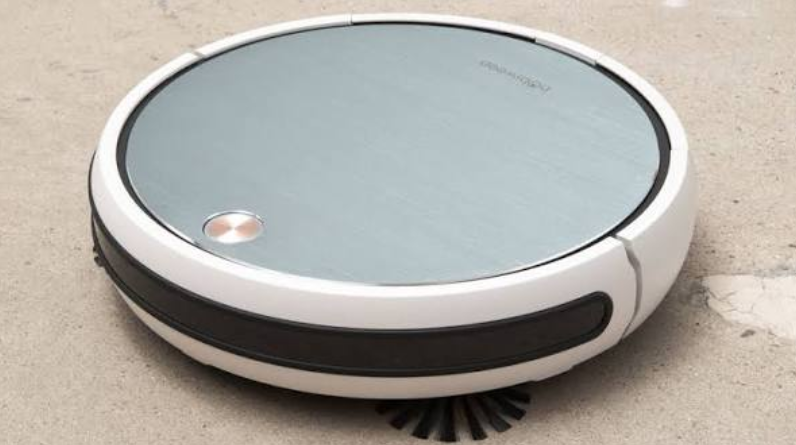
bObsweep demonstrates this distinction through its privacy-focused Bio robot vacuum and proprietary QSLAM® navigation technology.
Bio is designed to clean without taking or recording images of the home, family members, or pets. Meanwhile, QSLAM® combines LiDAR sensing with real-time computing to create maps and support efficient movement.
Together, these features illustrate how automated cleaning can combine intelligent navigation with a more privacy-conscious approach to household technology.
The Privacy Challenge in Modern Robotic Cleaning
Robot vacuums operate in environments that people naturally consider private.
Unlike outdoor delivery robots or industrial automation systems, household cleaning devices regularly enter bedrooms, living rooms, and personal spaces.
This creates a unique responsibility for manufacturers.
Consumers want machines capable of understanding their surroundings, but they may feel uncomfortable with unnecessary visual data collection inside their homes.
Different robotic vacuum manufacturers approach navigation through various combinations of cameras, sensors, and software.
Camera-based systems can provide detailed visual information, but they also raise questions about how images are processed, stored, and potentially transmitted.
For privacy-conscious households, these distinctions can become important purchasing considerations.
The central challenge is finding ways to deliver useful automation while limiting unnecessary exposure of personal information.
How bObsweep Bio Addresses Image Privacy
bObsweep Bio approaches this challenge by avoiding photographic recording during cleaning.
According to the manufacturer, the robot does not take or record images of household interiors, people, or pets.
This is particularly relevant because robotic vacuums frequently operate while residents are engaged in everyday activities.
A robot might clean while someone works from home, spends time with children, or relaxes in the living room.
Bio’s image-free approach means its normal cleaning operation does not involve creating photographs of those activities.
However, avoiding photographic recording does not mean that a connected appliance processes no information.
Navigation systems still require environmental measurements, and mobile applications may handle operational settings.
Consumers should distinguish between different categories of information rather than treating privacy as an all-or-nothing feature.
Bio’s specific contribution is straightforward: it provides robotic cleaning without taking pictures of the household.
Understanding the Technology Behind QSLAM®
Intelligent navigation is essential to the practical performance of a robotic vacuum.
A machine that moves randomly may eventually cover a room, but inefficient routes can waste time and create unnecessary repetition.
Modern navigation systems attempt to solve this problem by developing a representation of the surrounding environment.
bObsweep uses proprietary QSLAM® technology, short for Quantum Simultaneous Localization and Mapping.
The system combines LiDAR laser sensing with real-time computation.
LiDAR measures distances using light, allowing the robot to gather information about nearby surfaces and structural features.
Mapping software then interprets these measurements to estimate the robot’s location and develop a representation of the available space.
The important distinction is that the process does not inherently require photographic images.
For Bio, this approach supports navigation while remaining consistent with its image-free cleaning design.
Why Real-Time Mapping Makes Cleaning More Practical
One of QSLAM®’s defining characteristics is its ability to create maps while the robot operates.
Older mapping approaches sometimes required dedicated exploration sessions before regular cleaning could begin.
That preparation could make initial setup more complicated.
Bio’s QSLAM® system is designed to identify rooms and develop a map within minutes, without requiring a separate training run.
Instead of treating mapping as an additional household task, the robot incorporates it into normal operation.
This can simplify the experience for users who want their cleaning equipment to begin working with minimal preparation.
Real-time localization also helps the robot understand its position as it moves.
The system continuously interprets environmental information rather than depending exclusively on a fixed sequence of movements.
Although no navigation technology can guarantee perfect performance in every environment, rapid mapping provides a useful foundation for systematic cleaning.
Turning Digital Maps Into Household Control
A map becomes particularly valuable when homeowners can use it to customize cleaning.
Through the bObsweep mobile application, Bio owners can view the layouts generated by their robots and adjust how different areas are treated.
The system supports multiple floor maps, room customization, and user-defined cleaning boundaries.
For example, homeowners can establish NoSweep Zones where the robot should avoid vacuuming.
NoMop Zones provide similar control over areas where wet cleaning is undesirable.
These options are useful because households rarely have identical cleaning requirements.
A living room might need regular attention, while another area could contain objects that require special consideration.
Customizable maps allow users to adapt automated cleaning to these circumstances.
Rather than eliminating human control, intelligent navigation provides tools for making automation more personalized.
The Difference Between Mapping and Image Collection
One common misunderstanding about robotic cleaning is that creating a household map requires taking photographs.
In reality, mapping and photographic recording are different processes.
A navigation map represents information such as room boundaries, obstacles, and the robot’s estimated position.
A photograph captures visual details that may include identifiable objects, people, or activities.
These types of information can serve different purposes and carry different privacy implications.
Bio’s LiDAR-based navigation illustrates how a robot can understand spatial relationships without creating photographs.
The broader bObsweep product range also includes a different privacy approach: bobsweep’s on-bot off-cloud processing, used in camera-equipped models such as Ultra, where visual information is processed on the robot rather than transmitted as images or videos.
This is distinct from Bio’s approach, which avoids capturing images in the first place.
Understanding these model-specific differences helps consumers assess privacy features more accurately.
Why Efficient Navigation Matters Beyond Convenience
Navigation quality influences more than the amount of time a robot spends moving through a home.
It can also affect how consistently the appliance approaches different rooms and how easily owners can manage cleaning routines.
A structured map allows the device to work with a representation of the environment instead of relying entirely on unpredictable movements.
This can make automated cleaning easier to organize.
Homeowners can identify areas that require attention, establish boundaries, and adapt the robot’s operation when household arrangements change.
However, navigation systems still have practical limitations.
Furniture movement, cluttered floors, and changes to a charging station’s location can affect how a robot interprets its surroundings.
Maintaining a reasonably clear environment and following the manufacturer’s mapping guidance remain important.
Smart navigation reduces certain responsibilities, but it does not eliminate the need for occasional household preparation or maintenance.
Making Privacy an Everyday Product Consideration
Privacy is sometimes discussed as an abstract concern involving complicated policies and technical terminology.
For household appliances, however, it can be understood through practical questions.
Does the device take photographs? What information does it need to function? Where is that information processed? Which settings can the homeowner control?
These questions help consumers evaluate products according to their individual expectations.
A household that prioritizes avoiding indoor photography may find Bio’s design particularly relevant.
Someone interested in customizable cleaning may focus on the room maps and boundaries enabled by QSLAM®.
Importantly, the two priorities can complement each other.
The ability to navigate intelligently does not necessarily depend on collecting every possible type of environmental information.
Thoughtful product development involves selecting technologies appropriate for the functions they are intended to perform.
A More Thoughtful Direction for Home Automation
The development of robotic cleaning technology demonstrates how household automation is becoming increasingly sophisticated.
Consumers want devices that understand their environments, operate efficiently, and require minimal intervention.
At the same time, they expect greater transparency about how technology interacts with private spaces.
bObsweep Bio combines two characteristics relevant to these expectations: cleaning without photographic recording and QSLAM® navigation supported by LiDAR and real-time computing.
One addresses a specific privacy concern, while the other makes automated movement and customizable cleaning possible.
Together, they demonstrate that intelligent functionality and privacy-conscious design need not be competing priorities.
As connected appliances continue evolving, manufacturers will face increasing pressure to explain not only what their products can accomplish, but also how they accomplish it.
For consumers, the most useful innovations may be those that deliver meaningful convenience while maintaining clear boundaries around personal information.
The future of robotic cleaning is not simply about making machines more aware of their surroundings. It is also about ensuring that awareness serves the household without collecting more personal information than the task requires.
